
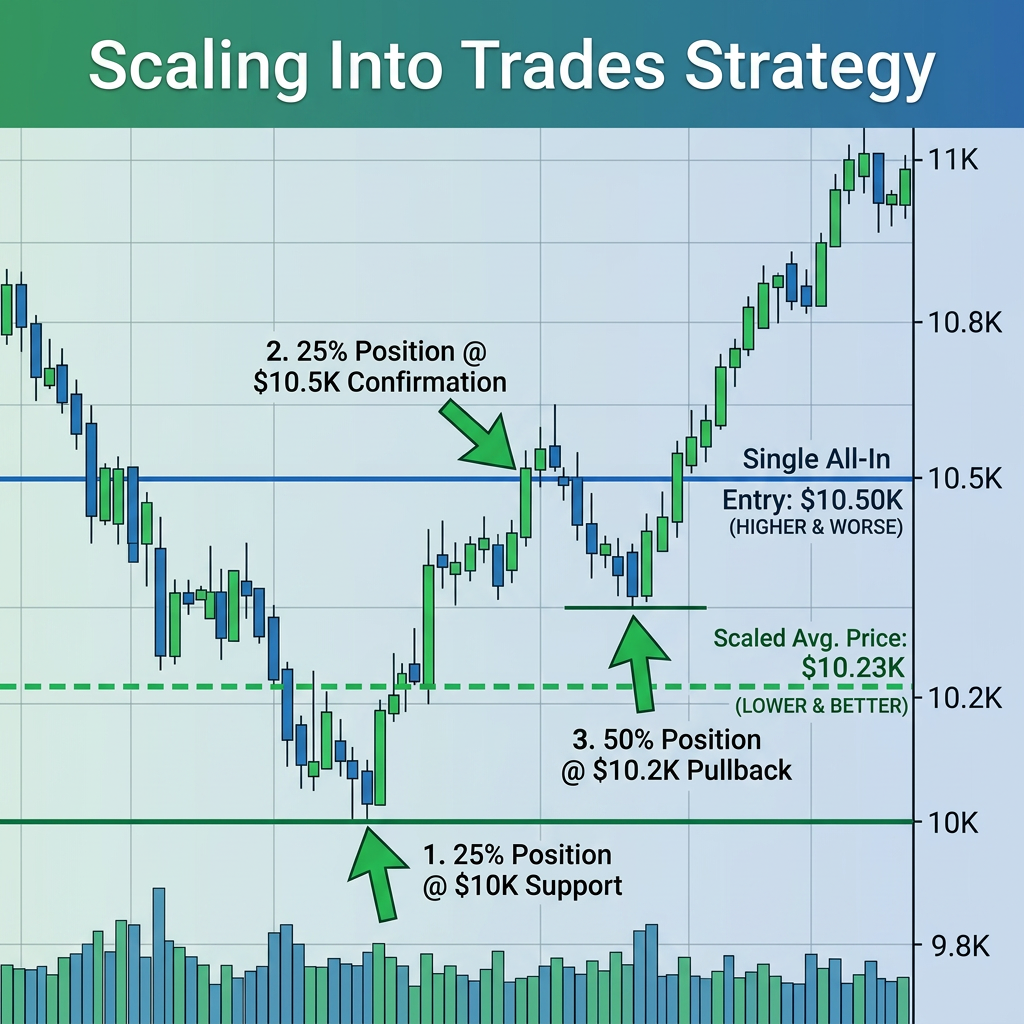
Scaling into trades is a trading strategy used by professional traders to manage risk, optimize profits, and gradually enter a position instead of committing the full trade size at once. This technique helps navigate volatile markets, reduce losses, and take advantage of favorable price movements.
Whether you are trading forex, stocks, commodities, or cryptocurrencies, understanding how and when to scale into trades is a crucial skill for consistent profitability.
Scaling into trades means entering a position in multiple smaller increments rather than one large order. Traders can scale in based on price levels, technical indicators, or market conditions.
Example: Instead of buying 100 shares of a stock all at once, you might:
This approach allows you to manage risk and avoid large losses if the market moves against you.
Scaling into trades reduces the risk of entering a full-size position at the wrong price, which is especially important for prop firm traders who must comply with maximum risk per trade rules.
By entering a position gradually, traders can adjust their exposure based on market conditions.
Scaling allows traders to improve their average entry price, smoothing out market volatility and reducing slippage.
Managing a position in increments can reduce emotional stress and prevent overtrading or panic exits.
Prop firm traders benefit from scaling strategies because:
Internal Link: Learn more about risk management in funded accounts: Risk Management in Prop Firm Trading
📊 Explore Prop Firms and Trading Assets You Can Trade
Q1: What does “scaling into trades” mean?
A: Scaling into trades means entering a position gradually in smaller increments instead of one full trade, helping reduce risk and optimize entry price.
Q2: Why do traders scale into trades?
A: Traders scale in to manage risk, improve average entry price, adjust exposure, and reduce emotional stress.
Q3: How does scaling work with prop firm accounts?
A: Prop firm traders use scaling to stay within maximum risk per trade and daily drawdown limits, while taking advantage of leverage safely.
Q4: Can scaling be combined with scaling out?
A: Yes. Many traders enter gradually and also scale out to lock in profits as the market moves in their favor.
Q5: Is scaling suitable for all assets?
A: Scaling works for stocks, forex, commodities, indices, and cryptocurrencies, but the number of increments and strategy should match the asset’s volatility and liquidity.
Honestly, transparently, and with real results. Our prop firm reviews are here to help you make the most informed choice when selecting your next funded trader program.
With years of trading experience and deep market knowledge, our team stays on top of industry trends, policy updates, and new proprietary trading firms entering the scene. We understand the importance of selecting a reliable prop firm that offers competitive profit splits, scalable accounts, and flexible trading rules. Whether you’re a beginner looking for your first funded account or a professional seeking the best prop firm for your strategy, we’re here to guide you every step of the way.
Start Your Trading Journey with the Best Prop Firms Today!
At PropFirm-Reviews.com, we offer comprehensive insights and recommendations on the best prop firms to help you take your trading to the next level. No matter your experience, our reviews and offers will ensure you find the right prop firm that aligns with your goals. Start trading smarter with the best prop firms today!
Copyright © 2026 propfirm-reviews.com